Before there was a studio, there was a room.
About 600 square feet. Brass poles. One that spun.
And a young woman who was, at that point in her life, still giving most of herself away.
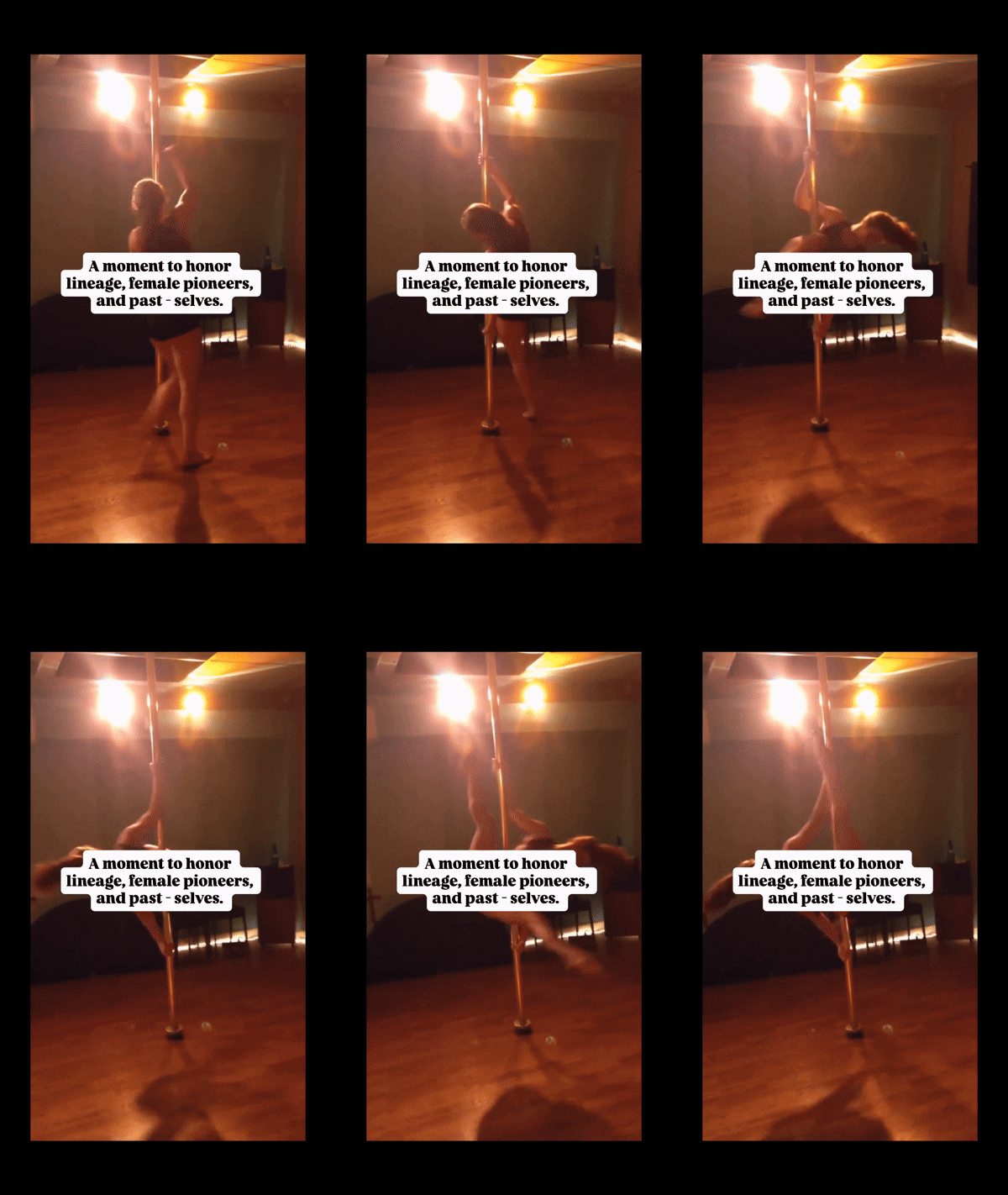
Emily Rose has shared a video from that room. It is the first pole dancing video she ever took of herself. And she describes what happened there not as a turning point in her fitness journey, or even in her pole career, but as the beginning of a different kind of conversation with her own body.
One that, eventually, became Thrive Embodied Arts.
What the Room Was Actually For
The skill of the movement matters less than what the movement opened up.
In that small space, for the first time, Emily learned how to move her hips, open her chest, and inhabit her body without the constant background noise of someone else's desire, gaze, or validation running underneath everything.
That might sound like a small thing. It was not a small thing.
Before that room, she had spent years in a very different relationship with her body. Using it as a tool for approval. Measuring its value by what it could earn from others. Accepting, from partners and from herself, a kind of love that was really just a more familiar form of disappearing.
That first body wave cracked something open. Not because of the trick itself, but because of what it asked of her: to be in her body for herself, not for anyone watching.
This is the origin of everything Thrive stands for. Not pole dancing as performance. Movement as a private conversation between a woman and her own body. A space where the internal experience is the point, not the external impression.
What an Hour a Week Can Do
Emily is careful to say this is not a story about pole dancing saving her. It is a story about what happens when you dedicate consistent time to learning something new, especially something rooted in artistry and physical expression.
An hour a week. Something that asks your body to do something it has never done before. Something that lives in the territory of creativity rather than productivity.
The shift that comes from that kind of practice is not dramatic or sudden. It is quiet and accumulative. New neural connections. New physical pathways. A gradually different sense of what your body is capable of and what it is for.
Emily has made it her life's work to show people where the dial is on that experience. How to find it in themselves. How to turn it up. That work is what became The Embodied Way and, ultimately, Thrive Embodied Arts.
A Tribute Worth Giving
The move Emily is doing in that early video is called a Jamilla. It is named for the woman who created it.
Jamilla Deville was one of the most celebrated figures in the pole industry. A former Miss Pole Dance Australia, an internationally recognized teacher and judge, and a pioneer whose two decade career was built on a simple conviction, stated in her own words:
"From the very beginning, we simply loved our art and wanted to share it with the world. We never let the taboos of the day stop us from our love of pole. It was all about our basic values of hard work, dedication and creativity."
Jamilla passed away recently. And while Thrive Embodied Arts exists in a different space from the pole world Jamilla was part of, Emily is clear that she does not bypass the women who pioneered liberation, even when her own room operates with different values.
Especially when she has gained from their genius.
How Pioneers Work
There is something Emily says about this that is worth sitting with:
Women like Jamilla wake up women like Emily. Neither knowing the other existed while it is happening.
Not because the goal is to produce copies of each other. But because a pioneer cuts a pathway that makes it possible for others to see that a pathway can be cut at all. That the thing they feel pulled toward is not impossible or inappropriate or too much. That someone else already proved it could be done.
Creativity. Possibility. Choice. These are not incidental to the Thrive philosophy. They are central to it. They are, Emily argues, among the greatest gifts we can offer each other as human beings.
Jamilla offered them. To a whole industry. To women she never met. To a 24 year old in a 600 square foot room in Connecticut who didn't yet know what she was building.
There Is Room for You Here
That small room became a studio. That studio became a community. That community continues to grow, welcoming women who are ready to start their own different conversation with their own bodies.
If something in this story is speaking to you, that is not an accident. Thrive Embodied Arts is always welcoming new students through the Beginner Experience, a structured pathway into this work designed to help you find your footing and your own dial.
We would love to see you in the room.
